
Home Staging vs Property Styling: What's the Difference? (2026 Perth Guide)
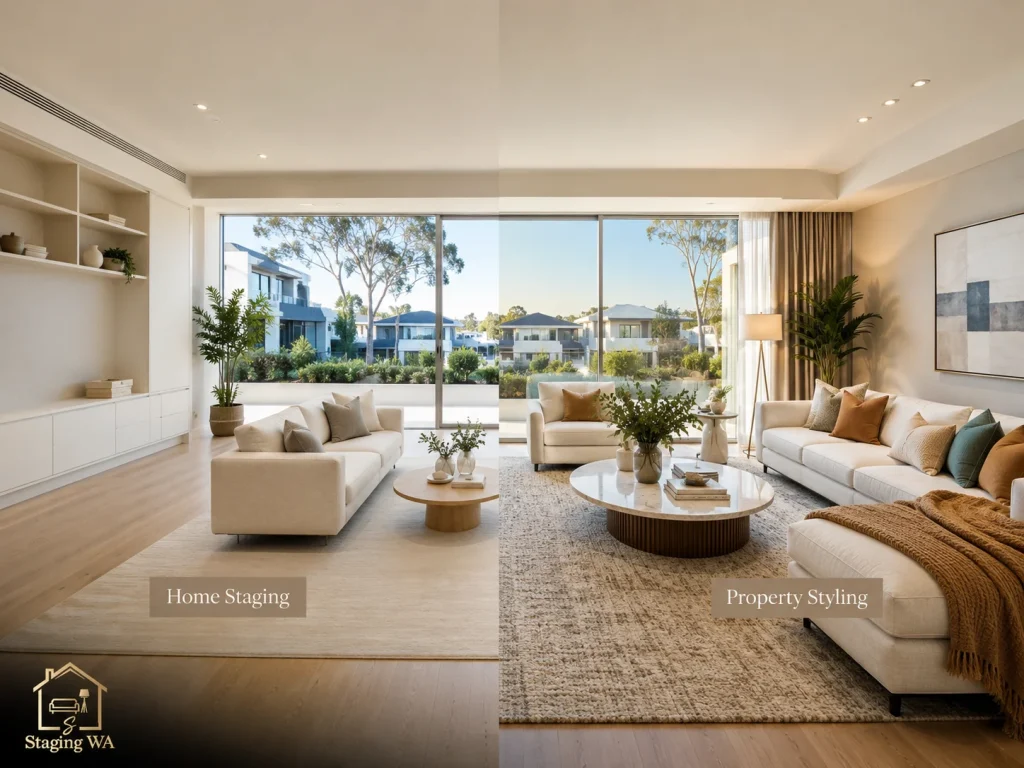
Two Perth homes go on the market the same week. One is empty, echoey, and photographs like a warehouse. The other feels warm, finished, and ready to move into, and it’s the one buyers keep coming back to. The difference usually isn’t the house. It’s whether someone got the styling and staging right.
According to the National Association of Realtors, staged homes are generally easier for buyers to visualise and often sell more quickly than unstaged properties.
Home Staging vs Property Styling at a Glance
Home Staging | Property Styling | |
Purpose | Sell the property | Improve how it looks and feels |
Timeframe | Temporary, tied to the sale campaign | Temporary or permanent |
Focus | Buyer psychology and broad appeal | Design, colour and personal taste |
Best suited to | Vacant or partly vacant homes | Occupied homes too |
Home staging is about selling, furnishing a property, often an empty one, so buyers can picture their own life in it. Property styling is about design, choosing furniture, colour, texture and layout so a home looks and feels its best, whether or not it’s on the market.
In Perth, most sellers need a blend of both, which is why Staging WA offers them as connected services rather than making you choose one.
Here’s everything else worth knowing: what each service really involves, why staged homes feel more valuable to buyers, what it costs in Perth, and how to know which one your home needs.
What Is Home Staging, Its Goal and Practice?
A home stager walks through your property the way a buyer would, noticing the empty corner, the room with no obvious use, the hallway that feels smaller than it is, and fixes those problems with furniture, layout changes and carefully chosen décor.
The goal isn’t to reflect your taste. It’s to help a stranger walk in and feel like the home already belongs to them.
In practice, staging usually means furnishing empty or partly empty rooms, replacing furniture that doesn’t suit the space, adding rugs and lighting to soften hard edges, and giving every room a job, including the ones that currently don’t have one.
A spare room with no clear purpose, for instance, becomes a home office with a desk, a chair and a plant. Suddenly it’s not “empty space.” It’s a feature.
What Is Property Styling?
Property styling is the design layer underneath staging. It’s about how furniture, colour, texture and lighting work together to build a cohesive look, modern, coastal, warm and contemporary, or classic, rather than a random collection of nice things.
The key difference is intent. Styling can absolutely be used to prepare a home for sale, but it’s just as often used by people who are staying exactly where they are and simply want their home to look and feel better day to day. Staging is built around a buyer’s expectations. Styling is built around design, whoever it’s for.
Why Staged Homes Feel More Valuable
There’s a psychological reason staging works as well as it does, and it’s worth understanding before you decide what your property needs.
Buyers form a first impression within seconds, often from a listing photo before they’ve even booked an inspection.
An empty room reads as smaller than it actually is, because there’s nothing to give it scale , no sofa to show how far the far wall really is, no rug to anchor the space. Add furniture back in, and the same room suddenly reads as generous and livable.
There’s also an emotional layer. People don’t just evaluate a house logically, they imagine themselves living in it, and that imagined life is what drives an offer.
A styled living room with a throw blanket, a full bookshelf and warm lighting doesn’t just look nicer in a photo. It tells a story buyers want to be part of.
A quick before-and-after example: picture an empty living room with bare walls and no furniture. Most buyers walk through it and think “this looks small.” Now add a large rug, a sofa, a coffee table and a piece of artwork. The same room, same square metres, suddenly reads as “this feels spacious and put together.” Nothing structural changed, only the buyer’s perception did. That perception is what staging and styling are designed to shape.
Staging vs Styling: The Full Comparison
Home Staging | Property Styling | |
Who it’s for | Sellers, agents, developers | Sellers and homeowners staying put |
Best used on | Vacant or partly vacant homes | Occupied or lived-in homes |
Furniture | Usually fully hired for the campaign | A mix of existing and new pieces |
Outcome measured by | Faster sale, stronger offers | Improved presentation and comfort |
So, Which One Does Your Home Need?
- Full Home Staging: Best suited for empty properties. Furnishing vacant rooms helps buyers understand the size, layout and purpose of each space while creating more appealing listing photos.
- Lived-In Home Styling: Ideal for homes that are occupied during the selling process. Existing furniture is decluttered, rearranged and enhanced with selected styling pieces to create a polished presentation without disrupting everyday living.
- Multi-Dwelling Styling: Designed for developers and builders selling multiple units or properties. A consistent styling approach creates a cohesive look across every listing and strengthens the overall marketing campaign.
- Property Styling: Perfect for homeowners who simply want to refresh their interiors. This design-focused service improves the look and feel of your home without the sales-focused strategy of home staging.
- Investment Property Styling: A practical option for rental properties. Light styling helps make the home more attractive to prospective tenants, increasing its appeal and supporting stronger rental returns.
Does It Really Change What Your Home Sells For?
Yes, because Staged homes tend to sell faster than unstaged ones, which matters more than it might sound, because every extra week on the market usually costs sellers more in holding costs and negotiating leverage than staging ever would.
Buyers form an opinion from online listing photos within seconds; dark, cluttered or empty-looking photos get scrolled past, while bright, styled ones get clicks and inspections booked.
Presentation also does quiet work in the background, it softens the impact of minor flaws. A narrow hallway, an awkward nook or a dim corner all read better once furniture, lighting and styling are doing their job. And because buyers are making an emotional decision as much as a financial one, a styled home is simply more likely to trigger an offer, often a stronger one than an empty room ever would.
Here’s the number that tends to change people’s minds: staging and styling typically cost well under 1% of a property’s value, while sellers who skip it often end up dropping their asking price by far more than that after a few slow weeks on the market. Framed that way, staging isn’t really an added cost, it’s closer to insurance against a price reduction.
What Does It Cost in Perth?
Perth styling and staging costs are generally more affordable than Sydney or Melbourne, but they still shift depending on your property. Based on current industry averages:
Property Type | What’s Involved | Typical Average Cost* |
Apartment or 2-bedroom home | Partial styling, key rooms only | Around $2,000–$3,500 |
3–4 bedroom vacant house | Full home staging, all main rooms | Around $3,000–$6,500 |
Larger or multi-living-area homes | Full staging plus outdoor space | Around $6,500–$10,000+ |
Lived-in home | Styling advice + accessory hire | Usually lower, since your existing furniture is reused |
Please Note: these are average industry figures, not fixed prices. Your actual cost depends on your property’s size, how many rooms need styling, campaign length, furniture selection, and access or delivery requirements.
The only way to get an accurate number is through a proper consultation, which is exactly how Staging WA starts every project, with a walkthrough followed by a tailored, transparent quote.
From First Call to Sold Sign: How the Process Works
It starts with a consultation, in person or via video call, where your stylist walks through the property to understand its features, likely buyer profile, and your sale timeline, not just what furniture will fit, but who’s actually going to be viewing this home and what they’ll respond to.
From there, you get a tailored styling plan built around that buyer profile, with furniture recommendations, package options and transparent pricing rather than a one-size-fits-all quote.
Once you’re happy with it, the styling team handles delivery and installation, every piece placed with photography and inspections in mind, since a room that looks good in person needs to look just as good through a camera lens. From there, your stylist checks in before key inspections to make sure everything’s still presentation-ready, right through to a full de-stage once the property sells.
What to Do Before the Stylist Arrives
Before your styling appointment, a little preparation can help achieve the best possible result:
- Give your home a thorough clean, including windows, skirting boards, floors, and other visible surfaces.
- Declutter personal items such as family photos, fridge magnets, paperwork, and everyday belongings to create a neutral space.
- Complete minor repairs, like patching chipped paint, fixing squeaky doors, tightening loose handles, or replacing blown light bulbs.
- Leave the styling to the professionals, once the space is clean and clutter-free, your stylist can efficiently transform it for photography and inspections.
The Rooms That Sell the House
Not every room deserves equal attention, and knowing where to focus makes styling far more cost-effective.
- The living room is usually the first main space buyers properly inspect, and it sets the emotional tone for the rest of the walkthrough, get this one right and buyers arrive at every other room already feeling positive.
- The kitchen is often considered the heart of the home; small additions like bar stools, a fruit bowl or fresh styling can dramatically lift how it photographs, even without any renovation.
- The main bedroom needs to feel like a retreat, not a storage room, clean lines, soft textures and good lighting do most of the work.
- The entrance matters more than sellers expect, because it’s the very first thing a buyer sees and it frames everything that follows.
- And don’t skip the outdoor area, a styled interior paired with a neglected backyard or balcony sends a mixed message about how well the whole property has been cared for.
Smaller rooms, like a second bedroom or a balcony, don’t need a full furniture package, a bed and a lamp, or a small table and two chairs, is often enough to show how the space works without making it feel crowded.
Mistakes That Cost Sellers Buyer Interest
Over-styling with bold, highly personal touches can actually narrow your buyer pool instead of widening it. The goal is broad appeal, not a showcase of your own taste.
Leaving rooms without a clear purpose is another common trap, since an undefined space makes buyers work harder to see its value, and buyers who have to work harder tend to walk away sooner.
Booking a stylist too close to your listing date is a mistake that’s easy to avoid but hard to fix once it happens it limits furniture availability and rushes the whole design process. And for genuinely vacant homes, styling advice alone won’t get the job done; an empty room needs furniture in it, which is exactly where staging, not styling, becomes essential.
Why Homeowners Across Perth Choose Staging WA
At Staging WA, we believe successful styling is about more than making a property look attractive, it’s about helping buyers connect with the home from the moment they see it online through to the final inspection.
Whether you’re selling a vacant property, occupied family home, or multi-unit development, our team customises every staging project to the property’s target buyers and campaign goals.
Explore our property styling services, or contact our team to discuss your upcoming sales campaign.
Frequently Asked Questions
Can I use my own furniture instead of hiring pieces?
Yes, in many cases. A stylist will assess what you already have and decide what stays, what’s rearranged, and what needs to be added or hired to complete the look.
How long does home staging take, from booking to move-in ready?
Most projects run three to four weeks from initial consultation to installation day, though this can move faster if your timeline is tight and furniture is available.
Does styling work for rental properties, not just sales?
Yes. Investors often use light styling to help a rental property attract stronger tenants and higher weekly rent, using many of the same presentation principles as a sale campaign.
Is virtual or digital styling as effective as physical staging?
Digital styling, editing photos to add furniture is cheaper, but it only affects online images. It can’t help during in-person inspections, so physical staging generally delivers a stronger overall result.